
Nothing tests a relationship quite like reversing a caravan. Just picture it: you’re hot, tired and running out of daylight. There’s a narrow site, curious neighbours, and suddenly your peaceful weekend away turns into a slow-motion shouting match involving the words ‘LEFT! I SAID LEFT!’ more times than you’d care to admit.
If that sounds familiar (or terrifying), you’re not alone. Reversing a caravan can seem daunting at first, but once you get the hang of the basics, it quickly starts to become second nature.
So, let’s walk you through how to reverse a caravan like a pro—even impressing your campsite neighbours!
Caravans have a unique way of moving, and this is especially true when reversing. Here’s how to make sense of it all:
When reversing, everything feels backwards—probably because it is. Turning your steering wheel to the left will make the rear of your caravan swing to the right, and vice versa.
It might seem completely counterintuitive at first, but once you wrap your head around it, it starts to feel surprisingly logical (and even satisfying).
The bigger your caravan, the more time it takes to respond to your steering inputs. While that might sound like a drawback, it actually gives you more control. Longer vans are more forgiving, allowing for smoother adjustments rather than sudden jerks.
It doesn’t take much to move a lot. Even minor turns of the wheel can create big changes at the back of your van. Steady, subtle corrections will keep things under control.
Reversing isn’t just about what’s happening behind you. It’s about understanding how your tow vehicle and caravan work together as one long lever. Always be aware of how the entire setup is moving, especially the front of your car. Watching only the back can lead to costly surprises.
Before you shift into reverse, it pays to slow down and set yourself up for success. When learning how to reverse a caravan, a little preparation goes a long way towards a smoother (and less stressful) park-up.
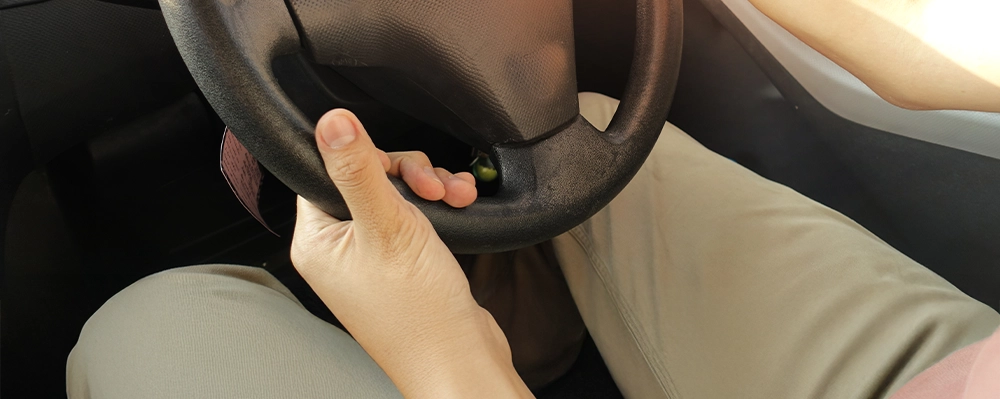
Once you’ve prepped your space and calmed your nerves, it’s time to put your plan into action. Here are three reliable reversing methods that’ll help you handle your van with complete confidence (and maybe even earn a silent nod of approval from your spotter and any watchful neighbours).
This simple trick is a game-changer for clearing up left/right confusion:
There’s no need for the mental gymnastics of reversed steering; simply move your hand in the direction you want the van to go, and it will follow. It makes staying consistent in tight situations much easier.
An excellent technique when space is limited, like driveways or narrow access roads:
When you need to back into a designated site with a curve, this is your go-to move:
Having the right spotter can make reversing feel simple. And the wrong one? Let’s just say you might be providing entertainment for half the campground.
But even the most helpful passenger can become a liability if you’re not on the same page. Here’s how to make sure your spotter stays your ally, and not your adversary:

Technology can be a huge help when reversing. But it’s no substitute for technique. Relying solely on one tool can lead to blind spots and missed cues. Here’s how to get the most out of your gear:
A reversing camera is super useful for hitching up or checking how close you are to an obstacle directly behind you. Keep in mind, though, that depth perception on a screen can be deceptive, particularly in low light or angled surfaces.
If you’re towing anything wider than your car (which, let’s face it, most vans are), extended mirrors are essential. They give you the visibility you need down both sides of the caravan so you can spot drift, track your angles, and avoid clipping things you might otherwise hit.
The ideal setup is using both. Use your mirrors to monitor side angles and how your caravan swings. And rely on the camera to check what’s directly behind you. Together, they give you a full picture of what your van is doing, and what it might hit next if you’re not careful. All Wonderland RV models come with reverse cameras and windscreen monitors as standard inclusions.
Reversing might feel tense at times, but it doesn’t have to be a saga. Steer clear of these classic errors and you’ll save yourself from stress:
When things start to go off track, it’s tempting to crank the steering wheel hard to fix it. But more often than not, that just makes things worse. Gentle, measured adjustments give you better control and a smoother result. Less is more.
It’s easy to focus entirely on the caravan, but don’t forget about the nose of your tow vehicle. As you turn, it can swing wide. So keep checking your front corners to avoid unexpected bumps.
Reversing isn’t a test of nerves, but it can feel like one. When stress creeps in, oversteering and rushed decisions follow. Stay calm, go slow, and breathe. You’re in control (and no one’s timing you).
No one’s born knowing how to reverse a caravan. It’s a learned skill, built with practice, patience and a bit of humility.
So give yourself the grace to learn it. Laugh off the little stuff. And if it helps, remember, a tricky campsite park-up just makes for a memorable story later on.
With the right prep, a steady hand, and maybe a bit of teamwork, you’ll be backing into sites like a champion, and turning heads for all the right reasons.